
Designing a faster prescription verification workflow for pharmacists
Ro
Reducing medication verification time and cognitive load in a high-risk, data-dense workflow.
My role
Lead product designer
Product strategy, problem definition, end-to-end design, user validation, implementation support, QA
Team
2 product managers, 1 clinical strategy director, 3 engineers, 3 beta-test pharmacists
Context
Pharmacists are responsible for ensuring that a prescription is safe given a patient’s current medications, allergies, and conditions.
Problem
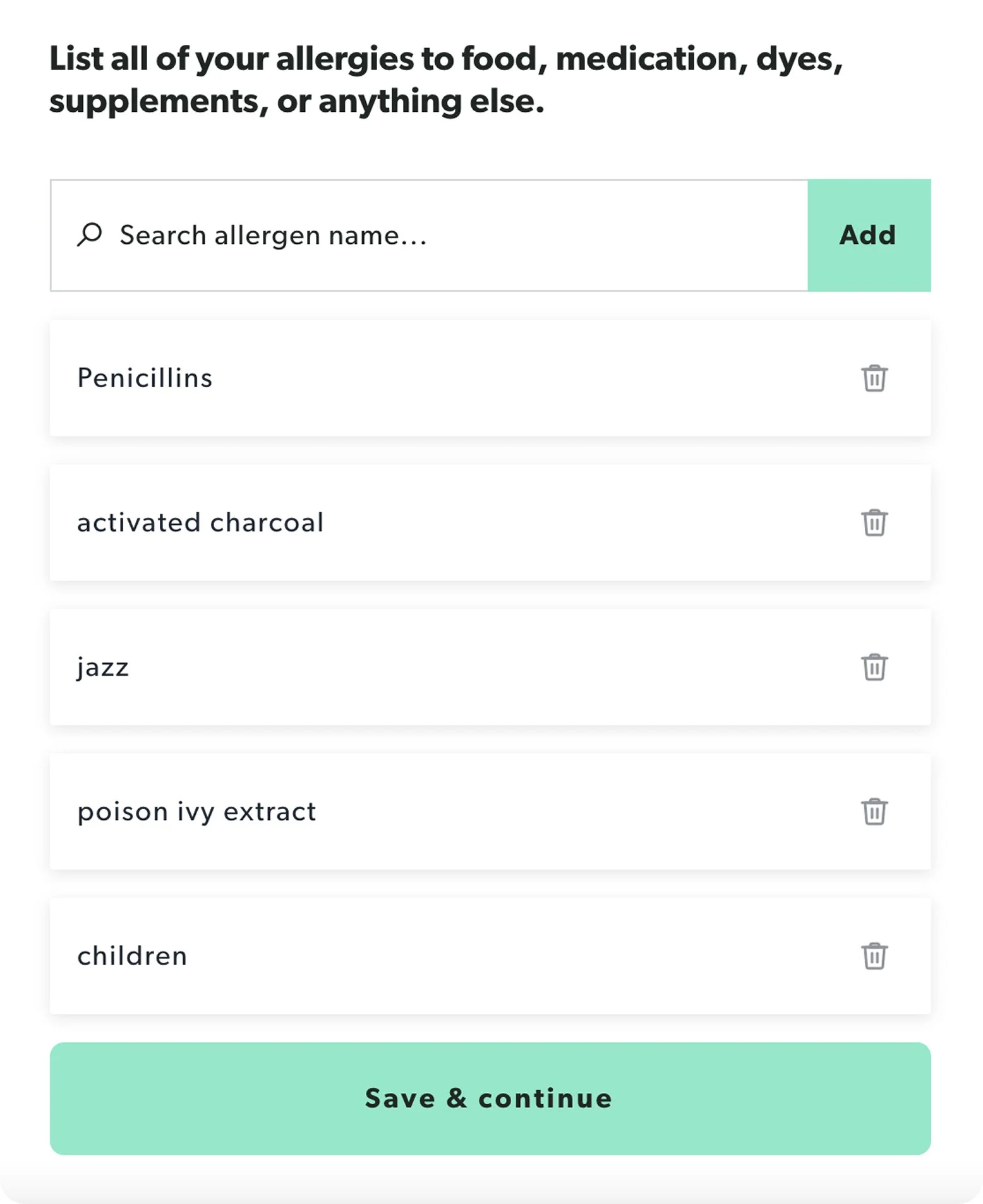
Manual verification of drug interactions slows pharmacists in a time-critical, safety-sensitive workflow.
Patients enter health data as unstructured free-text, making it difficult to reliably evaluate.
Pharmacists have to manually cross-check patient info against drug reference tools before completing prescription verification.
Evolving the medication verification workflow
Introducing structured data, automated interaction checks, cleaner visual design to reduce manual effort while preserving pharmacist judgment and accountability.
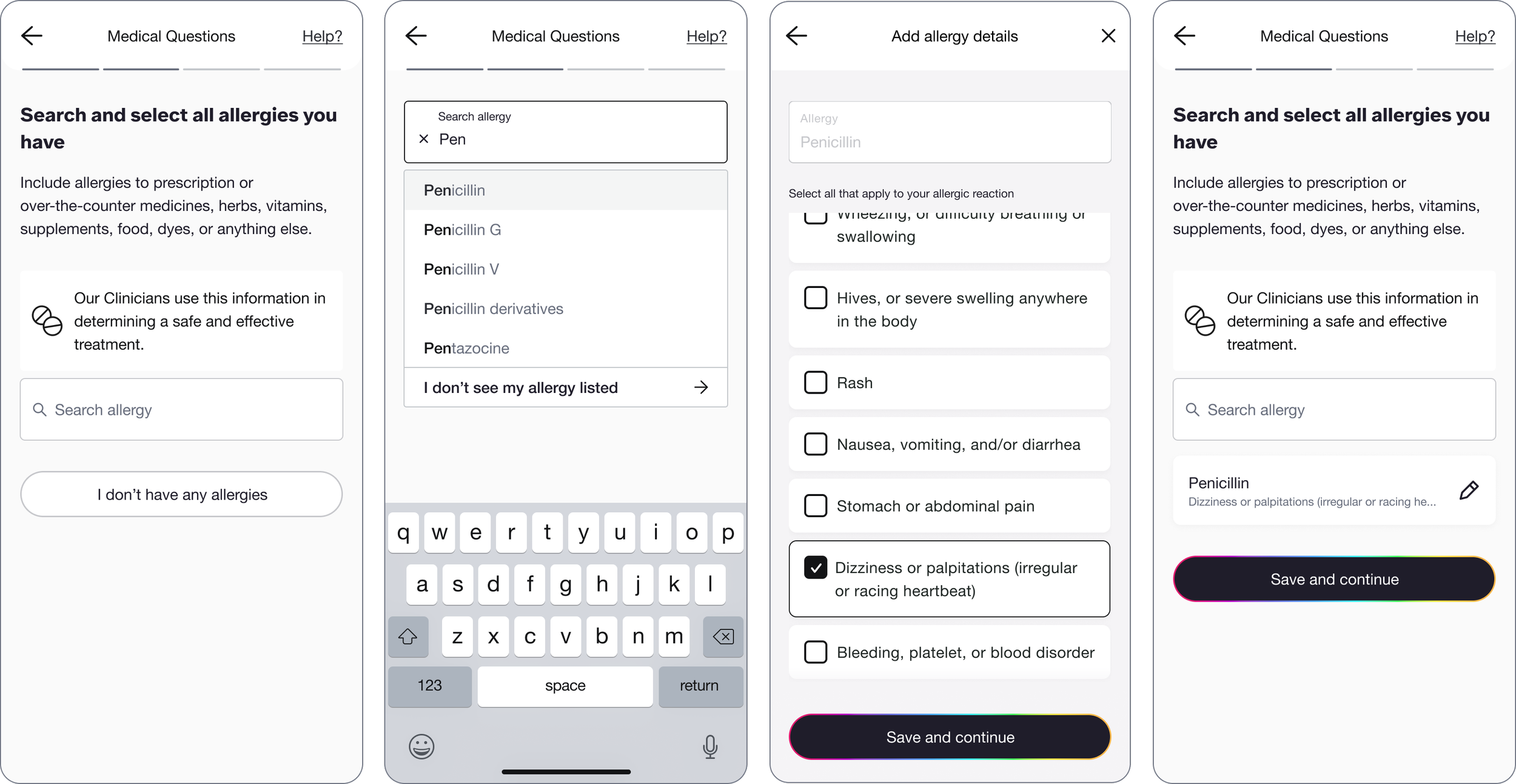
Patient enters structured data
Automated interaction check
Severity-based results
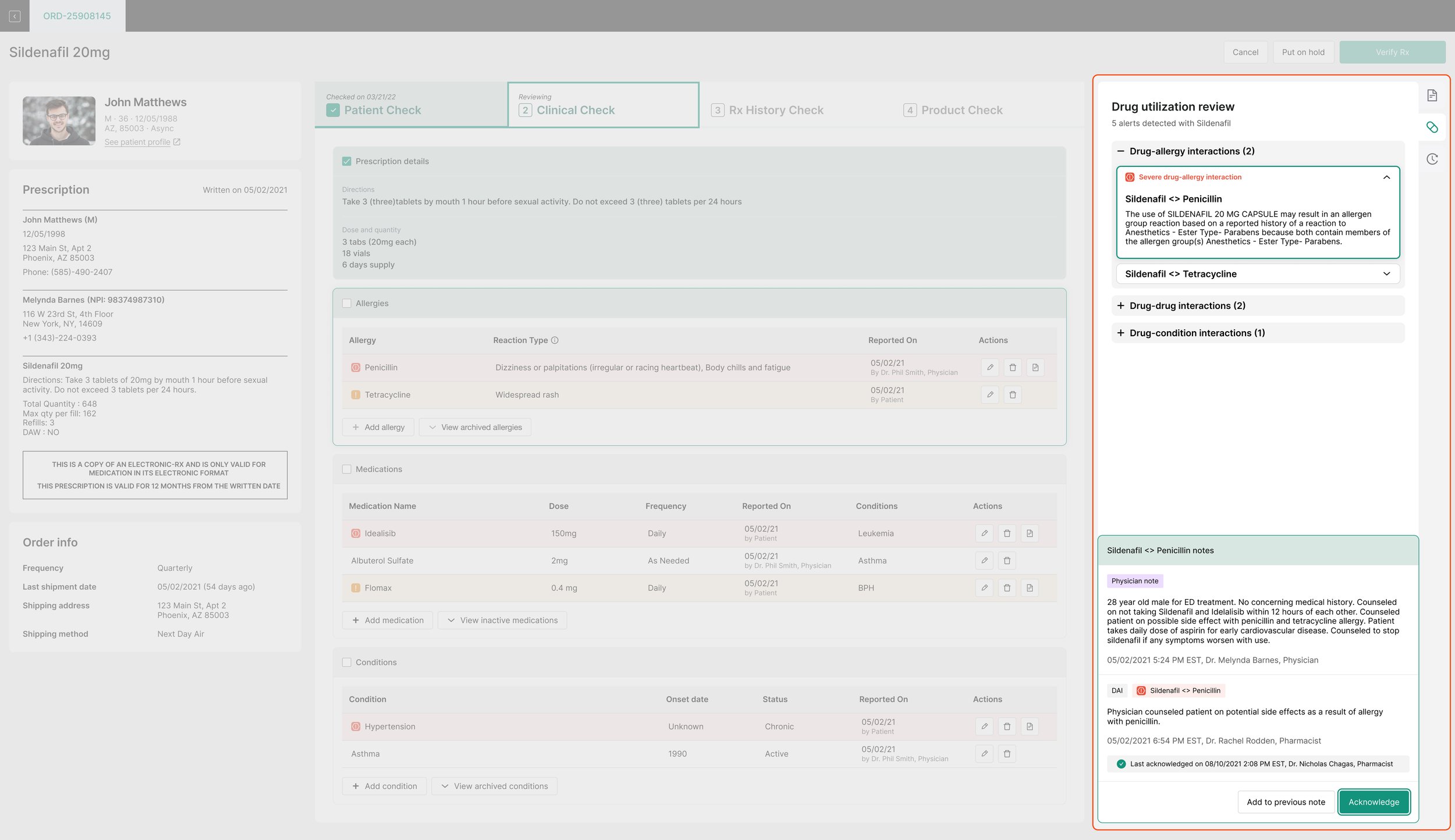
Pharmacist review & decision
Upstream improvements
Structured patient inputs
Forced structured patient inputs for entering medications, allergies, and conditions.
Core improvements
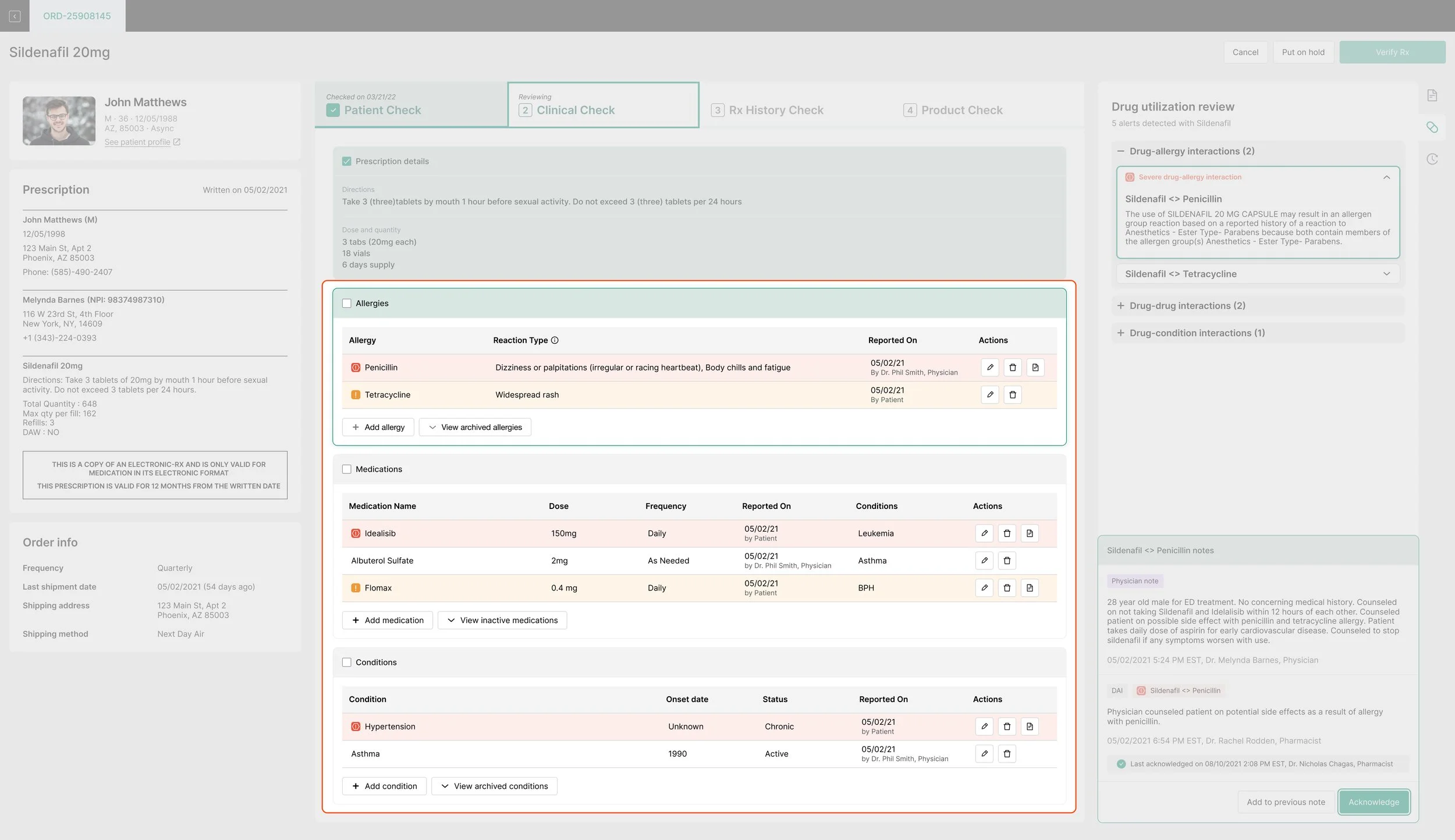
Automated interaction results
Integrated a drug interaction checking database that automatically evaluates drug, allergy, and condition interactions and returns severity levels to guide review.
Results are surfaced consistently across the prescribing interface and the pharmacist verification workflow to support shared context and faster decision-making.
Downstream improvements
Pharmacist review & actions
Redesigned the pharmacist review experience to surface interaction results clearly and support quick approve, override, or follow-up actions.
Automated checks flag risk, but pharmacists retained final decision-making authority, ensuring clinical judgment and accountability are preserved.
Impact
Reduced time spent on manual cross-checking
Reduced prescriptions put on hold due to follow-up
Lower cognitive load during verification
Improved prescription throughput per shift
Challenges
Speed under cognitive and environmental pressure. Pharmacists need to verify prescriptions quickly while managing multiple digital and physical tasks.
Automation without loss of clinical authority. The system needs to surface interaction risk clearly without replacing pharmacist judgment or violating regulatory requirements.